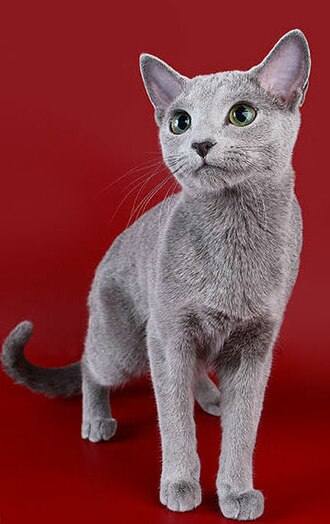

Russian Blue
Also called Archangel Blue
The Russian Blue is a medium cat from Russia, usually 3.5–7 kg, with a short coat, that needs about 30 minutes of play a day. It is known for being Reserved with strangers, Quiet, Loyal, Clever and Independent.
Is your cat a Russian Blue? Scan a photo to see which breeds it looks most like.
Scan a photo of your catInteresting fact
The breed is said to come from the Russian port of Arkhangelsk, which is why it was first shown in London in 1872 as the Archangel Cat. It had no class of its own until 1912, when it stopped competing against every other blue cat.
Traits
Scores from 1 to 5 are tendencies, not a promise about one cat.
Living with one
A gentle, quiet cat with a plush blue-grey coat. It bonds closely with its own household but is shy with visitors and may hide until they leave. It is at ease alone through a working day and suits a calm home, indoors, with a regular routine.
Play
About half an hour of play a day. Russian Blues enjoy chasing and fetching, learn quickly, and like a tall tree or shelf to watch from.
Grooming
The short, dense double coat needs a brush or comb about once a week, which also keeps the sheen. Shedding is moderate.
Health
- Few inherited conditions are well documented in the breed.
- Weight gain is common if the cat is fed freely and is not active.
General information, not veterinary advice. A vet, or the breeder or shelter, can tell you more about one particular cat.
Questions people ask about the Russian Blue
How big is the Russian Blue?
The Russian Blue is a medium cat, usually 3.5–7 kg.
What is the Russian Blue's coat like, and how much grooming does it need?
The Russian Blue has a short coat. It scores 2 out of 5 for grooming. The short, dense double coat needs a brush or comb about once a week, which also keeps the sheen.
Does the Russian Blue shed?
The Russian Blue sheds a moderate amount, scoring 3 out of 5 for shedding.
Does the Russian Blue suit indoor life?
The Russian Blue suits indoor life well. It scores 4 out of 5 for indoor life.
Is the Russian Blue good with young children?
The Russian Blue is fine with calm, respectful children and an adult watching. It scores 3 out of 5 for young children. These are tendencies, not a promise about one cat.
How does the Russian Blue get on with other cats and with dogs?
The Russian Blue gets on with other cats after a slow introduction, and can live with a calm dog after a careful introduction. It scores 3 out of 5 with other cats and 3 out of 5 with dogs. How a cat was handled as a kitten matters too.
How much play does the Russian Blue need?
It needs about 30 minutes of play a day. Russian Blues enjoy chasing and fetching, learn quickly, and like a tall tree or shelf to watch from.
How long can the Russian Blue be left alone?
The Russian Blue is independent and at ease alone for a working day. It scores 5 out of 5 for time alone.
Updated 21 November 2026. Facts checked against the breed's Wikipedia article and breed standards on 20 November 2026.
Not sure your cat is a Russian Blue?
Identify a cat's breed from a photo See the Russian Blue in the appOn our lists
- Cat breeds for indoor life number 12
- Cats for first-time owners number 14
- Quiet cat breeds number 8
- Low-maintenance cats number 12